Strategies to Eliminate Work Boredom Forever

Why Incorporating Fun into Work Boosts Enjoyment and Lasting OutputThe key to transforming work into something truly enjoyable while maintaining high levels of productivity lies in discovering methods to infuse a bit more excitement into our daily responsibilities.I wholeheartedly endorse this philo
Why Incorporating Fun into Work Boosts Enjoyment and Lasting Output
The key to transforming work into something truly enjoyable while maintaining high levels of productivity lies in discovering methods to infuse a bit more excitement into our daily responsibilities.
I wholeheartedly endorse this philosophy, as it forms the cornerstone of my book on enhancing productivity through positive emotions. However, a common challenge persists: certain tasks are inherently dull. There are professional obligations that lack any spark of interest, yet they demand our attention regardless.
Take, for instance, my annual duty to refresh the course schedule for BMAT and UCAT preparation on the associated website. This routine update requires only a handful of hours annually, but its monotonous nature causes me to delay it repeatedly. Consequently, I end up fielding urgent inquiries from anxious parents eager to secure spots for their children in our programs.
By procrastinating on this straightforward chore, I inadvertently create unnecessary stress for myself and others, all because the task feels overwhelmingly tedious.
If you're grappling with monotonous duties or enduring a lackluster daily grind from nine to five, know that you're far from isolated in these struggles. I've navigated identical bouts of frustration with soul-crushingly repetitive assignments.
Fortunately, for these uninspiring elements of our jobs, effective solutions exist.
Infusing a layer of enjoyment into our professional activities has the power to elevate them from dreary obligations to fulfilling endeavors.
Through extensive exploration over the years, including the research that shaped my publication, I've uncovered a collection of innovative approaches to genuinely enliven work routines.
In the following discussion, I'll outline seven of my most effective tactics for conquering workplace tedium and reintroducing delight into your everyday workflow.
The Scientific Basis for How Playfulness Overcomes Job Monotony
I recall a memorable evening during my time as a junior doctor when I revisited the classic film Mary Poppins alongside my roommate.
The iconic song 'A Spoonful of Sugar' resonated deeply with me, particularly these lines:
In every job that must be done, there is an element of fun. You find the fun and snap! The job’s a game.
At that moment, I couldn't fully appreciate the profound truth embedded in those words.
In the subsequent years, I dedicated substantial time to investigating the profound effects of playfulness and enjoyment on our output levels.
My findings revealed that numerous Nobel Prize recipients credit their groundbreaking achievements to an element of playful engagement.
Among them is Giorgio Parisi, the 2021 Nobel laureate in physics, who likened scientific inquiry to playing puzzles or immersing oneself in a detective novel, eagerly anticipating the revelation of the culprit ahead of the narrative's pace.
Similarly, Kary Mullis, the biochemist awarded the 1993 Nobel Prize in Chemistry for developing the polymerase chain reaction technique, characterized his laboratory endeavors as playful experimentation with oligonucleotides.
This perspective extends beyond elite scientists. Tech visionary Naval Ravikant views business creation through a lens of amusement, stating that he builds companies because they bring him joy and genuine interest in the products involved. Author Austin Kleon echoes this in his work, noting that crafting his poems felt less like labor and more like pure play.
Substantial psychological research supports these anecdotes, indicating that playful approaches unlock genuine productivity for three primary reasons.
First, it elevates our mood. Second, it alleviates performance pressure. Third, it expands our cognitive horizons and accumulates personal resources.
Explanation 1: Play Enhances Positive Feelings
In the late 1990s, neuroscientist Jaak Panksepp devised an intriguing experiment involving rats.
Using a dry paintbrush to gently stroke a rat's belly elicited high-pitched vocalizations not from discomfort, but from apparent laughter.
Prevailing scientific consensus at the time held that complex emotions were exclusive to humans due to our advanced neural architecture and societal frameworks.
Panksepp's observation challenged this view, suggesting that joy originates from more primal brain regions. Play appears hardwired into our biology, universally appealing across species.
The mechanism? Playful activities trigger dopamine release, fostering sensations of pleasure in both rodents and humans alike.
Thus, gamifying a routine assignment shifts it from a draining exercise to an invigorating pursuit.
Explanation 2: Play Reduces Stress and Tension
By age 27, Richard Feynman had earned acclaim as one of the era's preeminent physicists.
Yet, he found himself disengaged from his field, experiencing mental fatigue whenever attempting deep thought, with concepts appearing uninspired.
He retained pleasure in lecturing, perusing literature, and strolling the campus grounds, but lacked drive for substantive research.
This shifted dramatically one day in the cafeteria, where he observed a student spinning a plate that wobbled unevenly, with the university emblem rotating even more rapidly.
This peculiar phenomenon ignited his innate curiosity, reminding him of physics' original allure as a playful pursuit rather than mere obligation.
Motivated, Feynman devoted weeks to deriving the mathematics of the plate's motion purely for amusement. When colleagues questioned its relevance, he dismissed it lightheartedly: no practical value, just enjoyment.
Soon, he reengaged with complex queries, such as electron oscillations within atoms, approaching them playfully and free from exhaustion.

I experienced a parallel revelation while supporting surgeries in operating rooms.
Top surgeons cultivate an environment of levity amid high-stakes procedures, incorporating lively music, witty banter, and whimsical scrub cap designs featuring rainbows or mythical creatures.
They understand that excessive gravity saps vitality and impairs execution.
Thus, even in critical scenarios, embracing play sustains optimal performance.
A line from Doctor Who encapsulates this aptly: I approach my duties with utmost seriousness regarding their substance, but playfulness in their execution.
Explanation 3: Play Expands Horizons and Fortifies Capabilities
Psychologist Barbara Fredrickson introduced the broaden-and-build theory of positive emotions in the late 1990s.
This framework describes a virtuous cycle: positive states like joy, affection, or serenity broaden our mental repertoire, revealing novel pathways and fostering innovative ideas and social bonds.
This expansion prompts us to pursue these avenues, amassing skills, networks, and assets that enhance resilience against adversities.
Over time, these accumulations solidify our capacity to thrive amid challenges.
Far from transient, such emotions fundamentally shape cognition, interpersonal dynamics, and personal growth.
Practical Techniques to Infuse Genuine Enjoyment into Your Professional Tasks
With boredom identified as the adversary and play as the antidote, let's explore actionable strategies to combat dullness and enliven even the drabbest responsibilities. Here are seven proven methods to experiment with:
- Discover your unique play personality
- Pose the question: What would this task resemble if designed for maximum fun?
- Curate a personalized productivity music selection
- Pursue intriguing side quests
- Impose personal challenges
- Prioritize immersion in the process over fixating on results
- Develop your individualized play activity roster
Technique 1: Uncover Your Distinct Play Personality
During my youth, I was deeply immersed in World of Warcraft, a massively multiplayer online role-playing game tailored for enthusiasts like myself.
Players begin by selecting and customizing a character before venturing into the expansive realm of Azeroth.
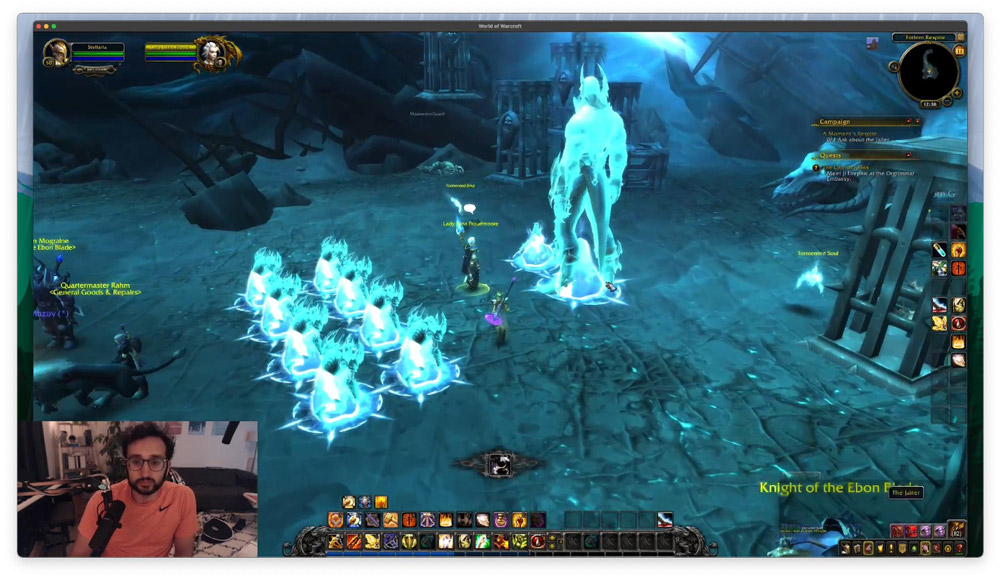
Reflecting on the 184 days I invested over three years, I attribute my devotion to the thrill of role immersion.
In the game, I shed my everyday identity, embodying Sepharoth, a commanding Blood Elf Warlock summoning demonic allies—a striking contrast to my real self.
This escapism amplified ordinary moments into epic narratives.
You might wonder how gaming translates to professional settings, but adopting a playful persona at work can similarly revitalize tedious duties.
No need for overt theatrics like goblin impersonations; it's about identifying resonant play styles and integrating them authentically.
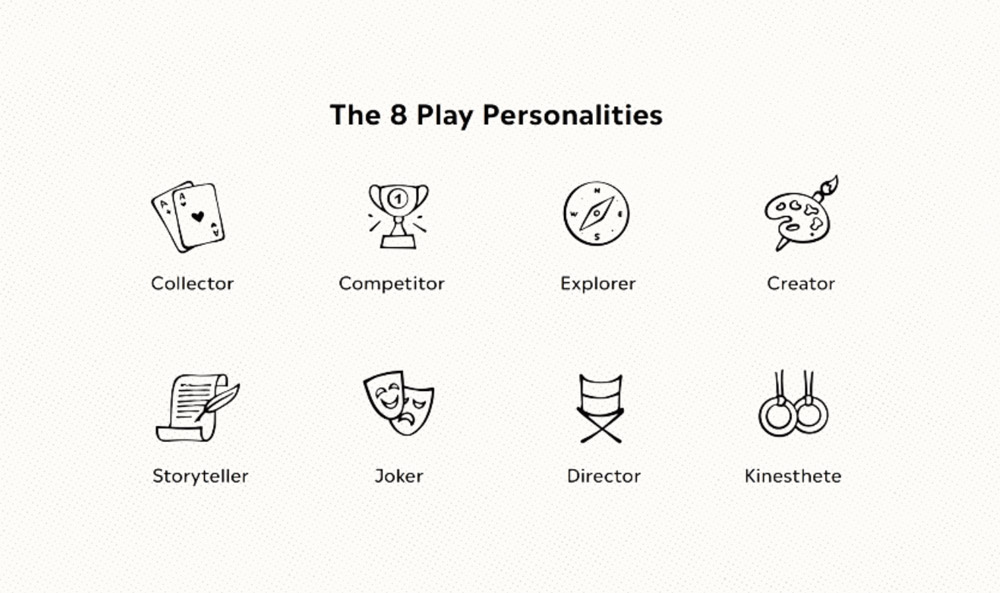
Through interviews with 5,000 individuals, psychologist Stuart Brown identified eight core play personalities.
The Eight Distinct Play Personalities
- The Collector: Derives immense satisfaction from accumulating and systematizing items or data, from botanical specimens to rare collectibles or obscure records.
- The Competitor: Fueled by victory in contests, athletics, or intellectual showdowns.
- The Explorer: Embraces wanderlust and novelty via expeditions, voyages, or uncharted territories.
- The Creator: Revels in fabrication, dedicating hours to composition, sketching, cultivation, or artistry.
- The Storyteller: Thrives on weaving tales, performance arts, scripting, choreography, or improvisational scenarios.
- The Joker: Delights in comedy, quips, and lighthearted mischief to uplift surroundings.
- The Director: Masters orchestration, strategy, and guidance across creative, commercial, or activist domains.
- The Kinesthete: Flourishes through bodily exertion and tactile adventures like tumbling, athletics, or parkour.
Implementing Play Personalities in Your Routine
Identify your dominant type and weave its essence into daily operations.
An Explorer might reframe administrative emailing as an adventure by composing it from a novel café, sparking discovery.
A Competitor could institute races against peers or self-imposed benchmarks for speed and precision.
Embracing your innate play style infuses creativity, rendering routines vibrant and engaging.
Technique 2: Inquire, What Would This Task Entail If Optimized for Fun?
Faced with resistance to a duty, I habitually prompt myself: What form would this take to maximize enjoyment?
This query features prominently as my phone's background image, underscoring its centrality to my productivity mindset.

Procrastinating on taxes? A fun version wouldn't involve a cramped desk setup; I'd relocate to a cozy café, savor a frothy latte, and pair it with an epic orchestral score like that from Lord of the Rings.
This guiding principle permeates my productivity framework, proving remarkably straightforward yet transformative.
For any unappealing assignment, envision its pleasurable iteration: alternate venues, collaborative sessions, melodic accompaniment, or rewarding indulgences upon completion.
This mindset shift converts drudgery into dynamic engagement, whether revitalizing meetings as collaborative ideation or gamifying checklists.
Technique 3: Assemble Your Ideal Productivity Soundtrack
In Cambridge, my Alexa devices provided constant ambient tunes during morning routines, sustaining vibrancy.
Relocating to London without equivalent setup led to diminished focus and vitality until I reinstated music, instantly revitalizing the space.
Activating tunes during slumps consistently boosts my drive.
Empirical evidence corroborates this: research in Thinking Skills and Creativity indicates moderate background audio, such as instrumentals or natural ambiences, amplifies creative output.
University of Birmingham findings further affirm that preferred music elevates efficiency and disposition during tasks.
Consequently, I've curated specialized playlists, including one for focused study sessions, ideal for newsletter composition.
Experiment with your sonic preferences—lo-fi rhythms, symphonic pieces, electronic pulses, or serene soundscapes—to foster an uplifting workspace.

Technique 4: Embark on Captivating Side Quests
Our team employs OKRs reframed as 'quests' with whimsical titles, like dubbing a pre-order campaign Operation Banger, imbuing it with playful momentum over sterile metrics.
This nomenclature subtly alters perceptual engagement.
Extend this by inserting side quests: stalled on a time management draft? Detour into a tangential curiosity, yielding indirect advancement, eased tension, and emergent inspirations.
Such detours cultivate inquisitiveness and serendipity.
Personally, alongside primary writing goals, side quests like reconnecting with distant friends balance life's facets holistically.
Technique 5: Impose Stimulating Challenges
Gym sessions thrill more when monitoring progressive milestones, embodying gamification fundamentals seen in leveling systems and real-time metrics that captivate users.
Apply this universally: rival colleagues, target micro-goals like 300 words per half-hour, or employ streak-building tactics akin to the Seinfeld Strategy to safeguard continuity.
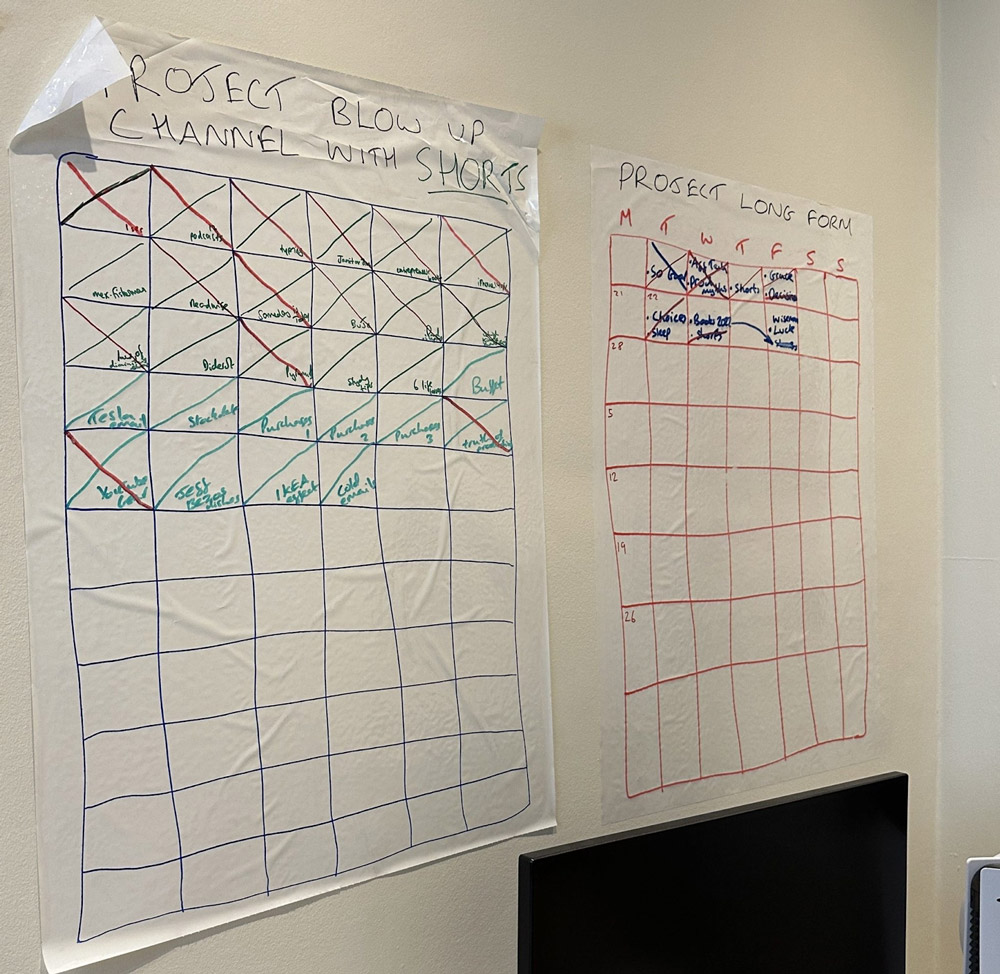
Our production team charts weekly video releases, deriving satisfaction from completions, injecting urgency, responsibility, and delight to sustain momentum.
Technique 6: Savor the Journey Over the Destination
Flow researcher Mihaly Csikszentmihalyi posits that process immersion fosters greater task affinity than outcome obsession.
Matthew Dicks, once a McDonald's drive-thru attendant, exemplified this by gamifying shifts through daily sauce upselling quests—barbecue on Mondays, sweet-and-sour Tuesdays—transforming monotony into anticipation.
He persuaded hesitant patrons with testimonials, enhancing interactions, personal enjoyment, and even franchise revenue.
Though the role lacked intrinsic appeal, he engineered playfulness within it.
Technique 7: Curate Your Personal Play Activity Inventory
When tasks resist enjoyment, intersperse play breaks to rejuvenate.
Compile a Playlist of 5+ minute recreations:
- Plotting vacations
- Savoring treats
- Perusing humorous or captivating reads
- Tending plants
- Strumming melodies
- Limbering stretches
And beyond. Deploy during lulls to recharge, accelerating completion despite tedium.
Overcoming occupational ennui demands subtle infusions of delight rather than overhauls. Amid pressures, work harbors potential for fulfillment when approached playfully. These strategies empower tackling deferred drudgery with renewed vigor.
Subscribe to the newsletter
Join 50,000+ others who get our content first. No spam, ever.