Fear of Family Separation Transforming Latino Lives and Community Responses

The apprehension surrounding family separation has deeply woven itself into the everyday experiences of Latino communities across the United States, appearing in diverse forms depending on circumstances and locations, as noted by numerous experts in the field. This pattern stands out particularly d
The apprehension surrounding family separation has deeply woven itself into the everyday experiences of Latino communities across the United States, appearing in diverse forms depending on circumstances and locations, as noted by numerous experts in the field.
This pattern stands out particularly during times of stricter immigration controls. Parents grapple with the decision of whether it's secure enough to bring their children to medical appointments. In households with mixed immigration statuses, teenagers second-guess pursuing higher education opportunities. Entire families steer clear of public gatherings. Gradually, these choices build up, fundamentally altering the ways families nurture each other and envision their paths forward.
For countless immigrant households, the reality of separation—be it imposed or voluntary—transcends a one-time event. It evolves into a profound emotional break that redefines their perceptions of security, community ties, and personal identity.
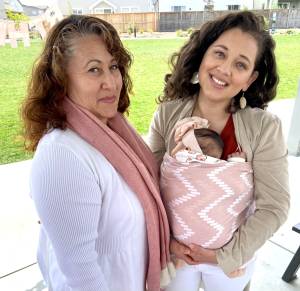
Diana Ortiz Giron, who serves as the director of programming and education at Cal Poly San Luis Obispo, shares her story as the youngest of three siblings brought up by a single mother confronted with a heart-wrenching decision. Back in 1996, her mother parted from her children, leaving them in the care of their aunt and grandmother, and crossed the border from Tijuana to Azusa in Southern California, driven by the pursuit of better economic prospects.
“My memories from Mexico are faint, but one thing that lingers is how people described me clinging to my mom’s leg each time she headed back to the United States,” she recalls vividly.
Even when families manage to reunite on U.S. soil, legal immigrants nowadays confront escalating anxieties about potential family disruptions, as Immigration and Customs Enforcement detains growing numbers of lawful residents without any criminal history.
Experts highlight that this issue is far from novel. Over many decades, U.S. immigration frameworks have fostered environments where physical, emotional, or expected separations recur as integral aspects of life for numerous Latino families—and now extending to immigrants from all backgrounds. The present enforcement environment amplifies these historical pressures, profoundly influencing health outcomes, daily choices, and interpersonal family bonds.
Investigations reveal that interactions with immigration authorities—ranging from racial profiling to personal connections with deportees—correlate with hesitations in seeking medical attention, like delaying check-ups, shunning hospitals, or skipping routine screenings, alongside heightened emotional strain. Every extra encounter heightens the chances of deferred medical care or diminished health reports.
Gustavo Carlo, a developmental psychologist at the University of California, Irvine, specializing in Latino youth and familial dynamics, asserts that the repercussions of separations tied to enforcement hit children and teens particularly hard.
“Such involuntary separations wield immense power and can devastate health and overall welfare,” Carlo explains. “Not only are they non-consensual, but they frequently infringe on fundamental human rights. On a widespread scale, they escalate fear, worry, and tension in manners that upend the existence of kids, households, and whole neighborhoods.”
Collectively, these insights indicate that contemporary enforcement strategies extend beyond sparking sporadic dread; they fundamentally influence how individuals handle routine choices concerning their physical and mental health. Advocates argue that current immigration approaches mirror larger societal decisions about whom society safeguards—impacts that stretch well beyond immigrant groups alone. Yet, these communities refuse to remain passive. Households, supporters, and grassroots groups are actively mitigating these burdens and innovating new support structures.
A Prolonged Legacy of Family Disruptions
The practice of separating families in the United States traces its origins to the 18th century, embedding itself deeply into national history.
From the brutal divisions of enslaved kin to restrictive immigration statutes that curtailed arrivals and reunifications, these measures have fractured familial ties across eras. Initial national policies, such as the Alien and Sedition Acts of 1798 and the Chinese Exclusion Act of 1882, curtailed movement and frequently barred families from staying intact or coming back together.
Entering the late 20th and early 21st centuries, immigration oversight grew more structured via broader detention networks and tighter collaborations between national and municipal agencies. The establishment of the Department of Homeland Security in 2002 reframed immigration controls within a security paradigm. Initiatives like Secure Communities and 287(g) pacts empowered local police to partner intimately with federal immigration bodies.
These shifts expanded enforcement into commonplace scenarios. Routine interactions, from traffic halts to other police contacts, could precipitate detention or removal, elevating separation risks far beyond frontier zones.
The Trump era represented a dramatic escalation in both the magnitude and public awareness of these tactics. The 2018 Zero Tolerance Policy required criminal charges for illegal border entries, leading to the parting of thousands of children from parents along the U.S.–Mexico boundary. Concurrently, ramped-up internal checks, factory sweeps, and attempts to eliminate programs like Deferred Action for Childhood Arrivals intensified unpredictability for families blending statuses.
In more recent times, immigration actions have torn apart tens of thousands of spouses and offspring. Countless additional families dwell under the shadow of possible splits, with some confronting agonizing choices about unity versus distance amid enforcement threats. Family separations persist as a persistent byproduct of U.S. immigration strategies.
Persistent Worry and Preemptive Mourning
Today, Ortiz Giron stands as a freshly naturalized U.S. citizen, having navigated undocumented status before gaining DACA protections. She confesses to perpetual concern over potential ICE encounters involving her husband, a Latino man with brown skin.
These apprehensions infiltrate even mundane situations. “We routinely discuss scenarios if detention occurs,” she shares. “With the baby secured in the car seat, me in the rear, and him at the wheel—if they demand he exit, our plan is set: stay out of it. Let them take you. I’ll secure legal help. I’ll locate the means to bring you back.”
Scholars in psychology and family dynamics are probing deeper: What unfolds when separation looms as a foreseeable norm?
To explore this, experts delineate three interrelated phenomena. Forced separation arises from parental detention or expulsion. Constrained-choice separation emerges when families proactively divide to evade peril or turmoil. Often underappreciated, fear of separation captures the enduring tension of existing under perpetual threat of familial fracture.
These elements interlink, compounding to mold the mental landscapes and cultural narratives of Latinos throughout the U.S.
Ortiz Giron’s early years exemplify constrained-choice separation, forged by imperatives of survival and finances. Though challenging, she views deportation-induced splits as akin to sudden bereavement.
“It strikes without warning. Preparation is impossible,” she notes. “Grief engulfs, severing bonds to the lost relative, with profound anguish permeating every stage. The terror parents endure, aware this could sever them from their kids, defies imagination.”
Navigating Enduring Instability
Maria-Elena De Trinidad Young, a scholar in immigrant health, examines how immigration regulations mold familial health. Her findings underscore uncertainty as a potent influencer of risk evaluation and care-related decisions.
“A major hurdle for communities now is the capacity to strategize and blueprint their futures,” she elaborates. This unpredictability permeates routines, swaying parental medical pursuits for offspring or youth educational ambitions.

Young stresses that this volatility predates headline-grabbing operations. It inheres within the policy terrain.
“The foundational stance here is exclusionary,” she observes. National and regional rules frequently bar entry to essentials like medical services, especially for those without papers. Prior to recent enforcement surges, families already maneuvered systems rife with uncertainties in healthcare, schooling, and employment.
This encompassing backdrop is crucial. Families respond not to standalone incidents but to a milieu of perpetual hazard.
Investigators now frame this beyond mere chilling influences. Immigrants endure not just institutional avoidance from fright, but recurrent, tangible brushes with enforcement—from job site incursions to vehicle stops or kin detentions. A lone expulsion can ripple through social circles, altering risk perceptions among peers, kin, and acquaintances.
Such episodes stack progressively, dictating mobility, safety judgments, and health choices.
The Emotional Burden on Youth from Separations
A long-term investigation tracked over 300 freshly arrived Latino teens in Los Angeles and Miami across a year, polling them repeatedly on discrimination encounters, depressive indicators, and social interactions.
Findings linked discrimination and ongoing stress to rising depressive signs over time, correlating with reduced prosocial and collaborative actions. Extensive prior research confirms family separations tie to elevated anxiety, depression, and trauma, with lingering impacts into maturity affecting academic success, relational bonds, and sustained welfare.
In certain areas, enforcement infiltrates sanctuaries like educational and judicial venues, derailing attendance, eroding security senses, and unraveling communal weaves in schools and localities.
A core reason for separation’s devastation lies in generating ambiguous loss, a term coined by therapist Pauline Boss. She portrays it as exceptionally taxing due to its vagueness and lack of resolution, complicating mourning or adjustment.
Immigrant family studies adapt this to deportations and extended partings. Luis H. Zayas’s work reveals that mixed-status children endure sustained dread, worry, and role upheavals post-parental detention or removal.
As detailed in his analysis, “The perpetual apprehension of parental seizure, holding, and expulsion establishes a backdrop risking psychological harm and developmental derailments for citizen-children… with actual parental arrests, detentions, and removals merely finalizing the ordeal.” Uncertainty rivals the separation in potency. A removed parent might sustain contact, yet absence lingers indefinitely.
Ambiguous loss blocks resolution. Families hover in limbo between optimism and sorrow, uncertain of reunion prospects. Prolonged, this tension splinters dynamics and severs communal links.
Hostile settings amplify seclusion. Enforcement fears prompt retreats from school- or faith-forged networks, fostering isolation and fragility.
Familismo Amid Separation’s Heavy Load
These repercussions transcend personal spheres. Gustavo Carlo invokes familismo, underscoring family’s pivotal place in Latino youth lives.
“Families form the crucible for child growth,” he states. “They offer sustenance while molding identity and mutual duties.”
Such principles can cultivate fortitude, spurring collective aid amid trials. Conversely, they magnify separation’s pain, stressing support webs. This resilience-strain duality characterizes myriad experiences.
Carlo adds that adversities do not dictate all fates.
“Despite traumas and obstacles, certain people surmount risks,” he affirms. “Potential exists not just for endurance, but positive contributions—bolstering kin, fortifying locales, and championing descendants.”
In deportation-threatened immigrant enclaves, separation materializes as tangible, persistent reality sculpting views on security, affiliation, and tomorrows.
Bolstering Families and Envisioning Compassionate Oversight
Amid separation’s trials, Latino households and groups devise harm-reduction and resilience-building tactics.
Legal assistance, rights education sessions, and case oversight aid unity and access to health, learning, and shelter. Peer circles, faith assemblies, and culturally attuned therapy furnish emotional bolstering and combat solitude.
Domestically, families craft navigation tools for separation risks. Recent research by Mahsa Rafieifar and Hui Huang probes undocumented parents’ dialogues with children on status and split perils. These exchanges prove meticulously orchestrated and affect-laden, balancing disclosure with fear shielding.
Certain parents weave migration tales, contextualizing U.S. journeys with optimism and prospects. Others counter “outlaw” labels by affirming family-centric motives. Status talks often merge with aspiration discourses, framing uncertainty via sacrifice narratives.
Toughest exchanges involve contingency blueprints, like alternate caregiving. While some designate guardians and prep offspring, others sidestep, mirroring decision gravity.
These efforts spotlight families’ subdued labors for stability under hazard. They also reveal self-management boundaries.
Communally, entities like Freedom for Immigrants and UnidosUS push unity-prioritizing policies, deportation cuts, and service investments over confinement. Harm mitigation demands personal and structural shifts, per advocates.
Community Strategies to Mitigate Impacts
What measures could alleviate separation’s burdens for families and locales where it permeates daily existence?
Evidence mounts that community aids and policy reforms substantially cushion enforcement effects on youth and kin.

Public health and social work inquiries affirm that reliable legal aid, locale health offerings, and school supports lessen distress and enhance child prospects in mixed families. Universal legal aid links to superior case wins and stability, enabling parental presence and resource access.
Mental health experts spotlight culturally attuned, family-focused care. Peer aid, trauma-aware therapy, and locale counseling diminish anxiety and depression in immigration-stressed youth by restoring trust and bonds, eroded in enforcement zones.
Policy-wise, pivoting from detention proves vital. Community case management yields high compliance sans splits. Curbing extended holds and enforcement in schools or clinics revives institutional safety.
Advocates like Freedom for Immigrants and UnidosUS insist humane oversight foregrounds unity and child welfare, funding legal, educational, health, and economic pillars for stability.
Data posits separation harms as malleable, reducible via supportive frameworks. Proper aids enable communities to shield development, fostering endurance and flourishing.
Such policies promise broader gains. Maria-Elena De Trinidad Young notes immigration rules transcend migrants.
“Pre-2025 studies in anti-immigrant states showed poorer health for U.S.-born citizens across races,” she says. “Immigration policy signals societal values, with anti-immigrant stances harming universal well-being.”
Subscribe to the newsletter
Join 50,000+ others who get our content first. No spam, ever.